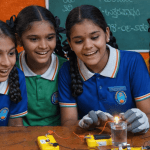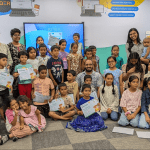
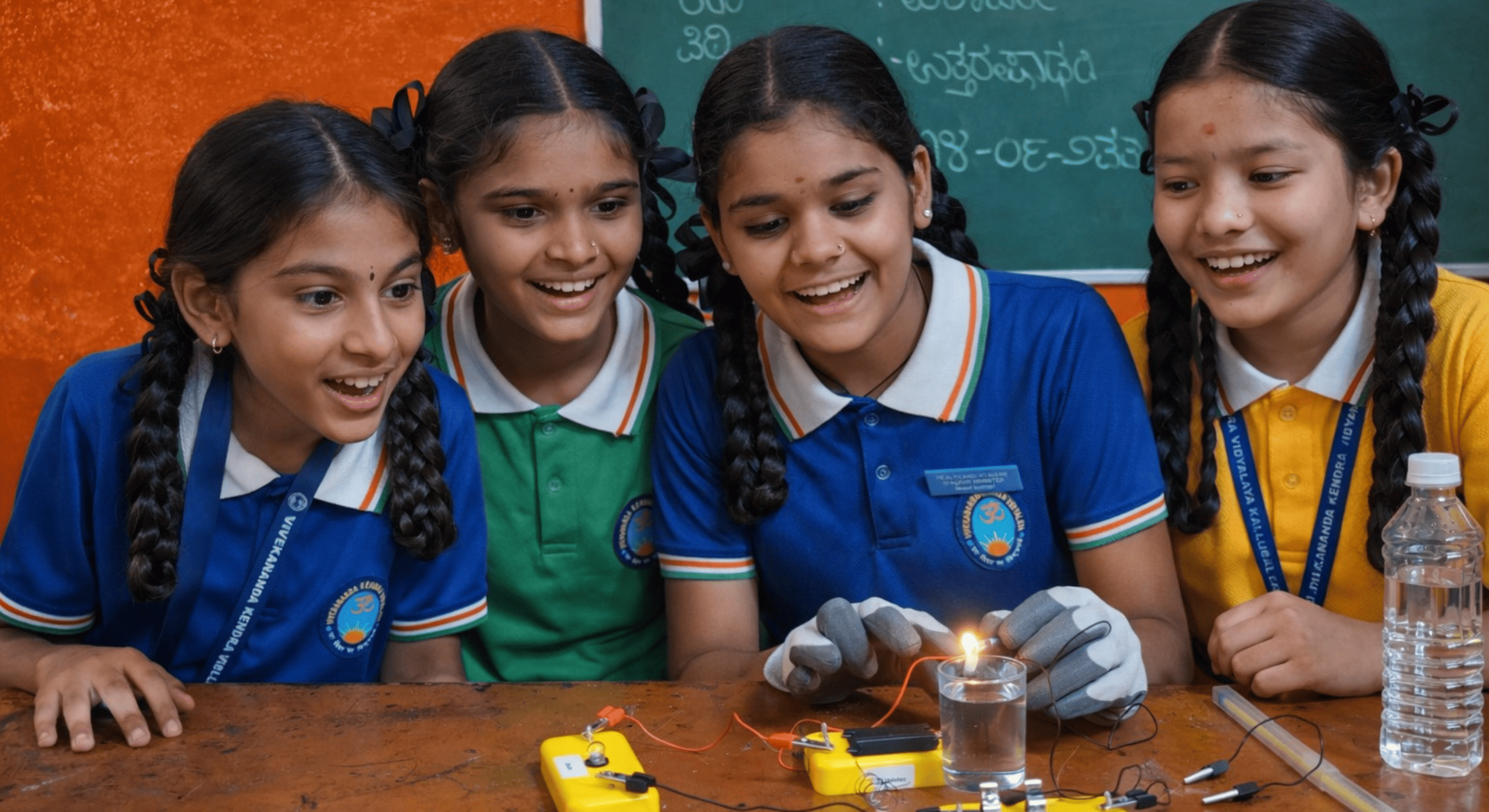
“The day I realised my students remembered an experiment from six months ago but forgot yesterday’s lecture, I knew something had to change.”
That was probably the most honest thing Meera (name changed), a middle school science teacher in Bengaluru, told us over coffee.
Like many Indian teachers, she’d spent years trying to balance lesson plans, syllabus completion, exams, classroom discipline, and the never-ending paperwork.
“I wasn’t a bad teacher,” she laughed. “In fact, my classes were quiet.
Students copied notes. I finished every chapter on time.
She paused before adding,
“But I wasn’t sure they were actually learning.”
That conversation stayed with us. Because Meera isn’t alone.
Across India, thousands of teachers are asking the same question:
How do I make my classroom a place where students genuinely understand instead of simply memorising?
Her answer surprised us.
“It wasn’t about teaching more,” she said.
“It was about making students experience more.”
“I stopped explaining everything.”
“I used to think it was my job to have all the answers.”
“Now,” she smiled, “I start with questions.”
Instead of beginning a lesson on evaporation with definitions, she asks, “Why do wet clothes dry faster in summer?”
A chapter on pressure starts with, “Why does a pressure cooker cook food faster?”
A lesson on light begins with students chasing shadows in the playground. “The classroom suddenly became noisy.”
Then she laughed again. “The good kind of noisy.”
“Curiosity finishes lessons faster than instructions.”
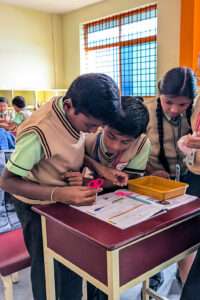
One thing Meera noticed was that students naturally became invested when they were curious.
Earlier, she spent fifteen minutes getting everyone’s attention.
Now?
“They’re already asking questions before I’ve even opened the textbook.”
When students become curious first, teaching becomes easier – not harder.
“You don’t need an expensive lab.”
One misconception she wishes more teachers would stop believing?
That experiential learning is only possible in well-funded schools.
“My favourite science activity used a balloon, a plastic bottle and warm water.”
She has taught concepts using:
“The children don’t care whether the equipment costs ₹5 or ₹5,000.”
“They care if they get to discover something.”
“I stopped correcting answers immediately.”
This one surprised us.
“When a student gives the wrong answer, I don’t rush to correct them anymore.”
Instead, she asks, “Why do you think that?”
Sometimes another student joins the discussion.
Sometimes the experiment proves everyone wrong.
And that’s perfectly okay.
“Those moments,” she said, “are when real learning happens.”
“Group work changed my quiet students.”
Every classroom has them-
The students who never raise their hands.
The ones who sit quietly in the last row.
“I realised they had plenty to say.”
“They just didn’t want to say it to forty classmates.”
Small investigations and group activities gave those students a voice.
Some became presenters.
Some became observers.
Some were brilliant at recording results.
“They all found a way to contribute.”
“Reflection is where learning actually happens.”
At the end of every activity, Meera asks only three questions.
What happened?
Why do you think it happened?
Where do you see this in real life?
“Those three questions are more valuable than another page of notes.”
Reflection helps students connect today’s lesson with tomorrow’s world.
“I still finish my syllabus.”
This was perhaps the biggest surprise.
We asked whether all these activities slowed her down. “They actually save time.”
Students need fewer revisions because they remember concepts better. There are fewer blank faces before exams.
And classroom discussions become richer because students already have something to connect with.
“It feels slower during the lesson.”
“But much faster over the year.”
So, What Really Makes Teaching Effective?
As our conversation ended, we asked Meera one final question.
“If you could give one piece of advice to every teacher in India, what would it be?”
She didn’t hesitate. “Stop trying to make students remember your lesson. Help them experience it.”
Because students rarely remember every definition. But they remember the experiment that made them laugh.
The debate that challenged their thinking.
The activity where they finally understood why something happens.
Those experiences stay with them long after the textbook is closed.
Making Experiential Learning Easier for Every Teacher
Teachers like Meera are proving that experiential learning doesn’t require expensive laboratories or endless preparation. What it does require is the right support.
That’s exactly why we built Xperimentor.
Our platform helps schools bring experiential learning into everyday classrooms through curriculum-aligned hands-on activities, inquiry-based digital learning, ready-to-use teacher resources, competency-based assessments, and AI-powered insights that reduce preparation time while increasing student engagement.
Whether you’re introducing activity-based learning for the first time or looking to strengthen your school’s implementation of NEP 2020, Xperimentor helps teachers spend less time preparing lessons and more time creating meaningful learning experiences.
Because the best classrooms aren’t the ones where students sit quietly.
They’re the ones where curiosity is impossible to ignore.
What about your classroom?
What’s one activity that completely changed the way your students learned?
Share your experience on marketing@scikraft.com we’d love to feature stories from teachers across India.